
Description
Bayberry Bark Powder (Myrica cerifera)
Common name: Bayberry Bark Powder, Bayberry Root Bark Powder, Wax Myrtle Bark, Southern Bayberry, Candleberry
Botanical name: Myrica cerifera L. (also Morella cerifera (L.) Small)
Plant family: Myricaceae
Plant part: Root bark
Origin: The southeastern United States and the Gulf coast, with related species in the Caribbean and Central America
Product Overview:
Bayberry is a tough, evergreen shrub that grows along the coasts and wetlands of the southeastern United States. Its small, round berries are covered with a waxy coating, which early settlers boiled to make fragrant candles, and that is why people call it the candleberry or wax myrtle. The plant also has a long history in herbal practice, where people have mainly used the bark of the root.
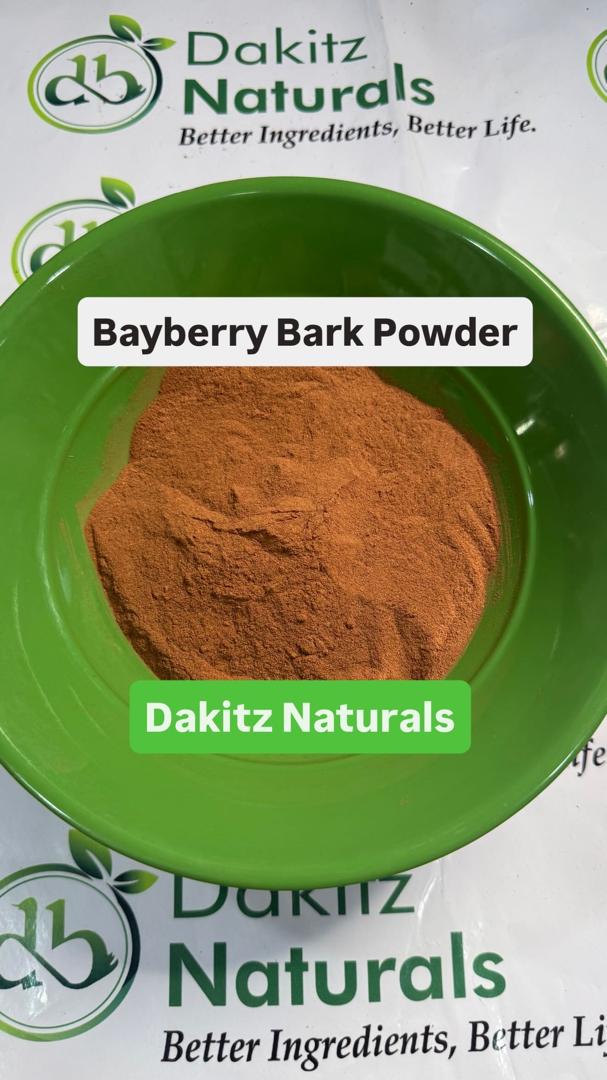
Our Bayberry Bark Powder comes from carefully dried, finely ground root bark. The powder is reddish-brown to tan, with a strongly astringent, bitter taste that dries the mouth, and a faint resinous aroma. The astringent quality comes from tannins, natural plant compounds that give the bark its traditional reputation and its use in dyeing and tanning.
If you enjoy traditional herbal barks, you may also like Birch Bark Powder, Cascara Sagrada Powder, and Cabinda Bark Powder. Each one has its own character and its own precautions. Start with a very small amount, and talk to a qualified herbalist if you are unsure.
Nutritional value:
Bayberry bark is valued as a traditional herbal botanical, not for calories or macronutrients. It is mainly a source of tannins and other plant compounds.
Composition:
Contains naturally occurring tannins, triterpenes (including myricadiol, taraxerol and taraxerone), flavonoid glycosides (including myricitrin), astringent resin and gum. Together, these give the bark its strong astringency and its characteristic phytochemical profile.
Benefits:
- Traditionally used in Western herbal practice as a strong astringent bark
- Traditionally valued in small amounts and for short periods
- Rich in natural tannins, which give the bark its drying, astringent quality
- Provides triterpenes and flavonoid glycosides found in the root bark
- Valued as a heritage herb in the folk traditions of North America and Asia
- Commonly used historically in dyeing and tanning as well as herbal practice
- Contains antioxidant compounds
- Traditionally used to support digestive health
- Traditionally used for oral and gum care.
Uses:
- Prepare it as a traditional decoction, in small amounts
- Take it in capsules as part of a short-term herbal routine
- Blend small amounts with complementary herbs in traditional preparations
- Use it to make tinctures and extracts
Precautions:
- Bayberry bark is a strong, tannin-rich herb. Use only small amounts, and only for short periods.
- Pregnant or breastfeeding individuals should not use it.
- Do not give it to children.
- If you take prescription medication, check with a healthcare professional first, because bayberry compounds may interact with some medicines.
- Stop use if you notice stomach upset, nausea, headache, or an allergic reaction.
Storage:
- Keep it in a cool, dry place away from moisture, sunlight, and heat
- Store it in an airtight container, out of reach of children
Packaging
Our powders are packaged in Ziploc bags to avoid spillage.
Shelf Life:
• Up to 2 years when stored properly in sealed packaging
• Best potency when consumed within 12–24 months
Note:
No artificial colors, flavors, or preservatives. Product is a natural botanical ingredient; color may vary depending on harvest lot and year.
Disclaimer:
This product is a natural food supplement and not evaluated by the Food and Drug Administration (FDA). It is intended for educational purposes only and is not intended to diagnose, treat, cure, or prevent any disease.
Consult a healthcare professional before use if you have allergies or medical conditions
By purchasing, you acknowledge responsibility for safe and appropriate use.
Frequently Asked Questions
What is bayberry bark?
It is the dried root bark of the bayberry or wax myrtle shrub (Myrica cerifera). Herbalists have traditionally used it as a strong, astringent herb in small amounts.
What does bayberry bark taste like?
It tastes bitter, strongly astringent, and drying, like very strong black tea.
Is bayberry the same as Chinese bayberry?
No. Chinese bayberry (Myrica rubra), also called yumberry or yang mei, is a different plant. Its fruit is edible, and its bark has separate traditional uses. Check the botanical name on the label.
Is bayberry bark the same as the bayberry used in candles?
They come from the same plant. The candle wax is taken from the waxy coating of the berries, and the powder is made from the root bark.
Can I use bayberry bark every day?
We recommend short periods only. Check with a healthcare professional first if you take medication or have a health condition.









Reviews
There are no reviews yet.