Description
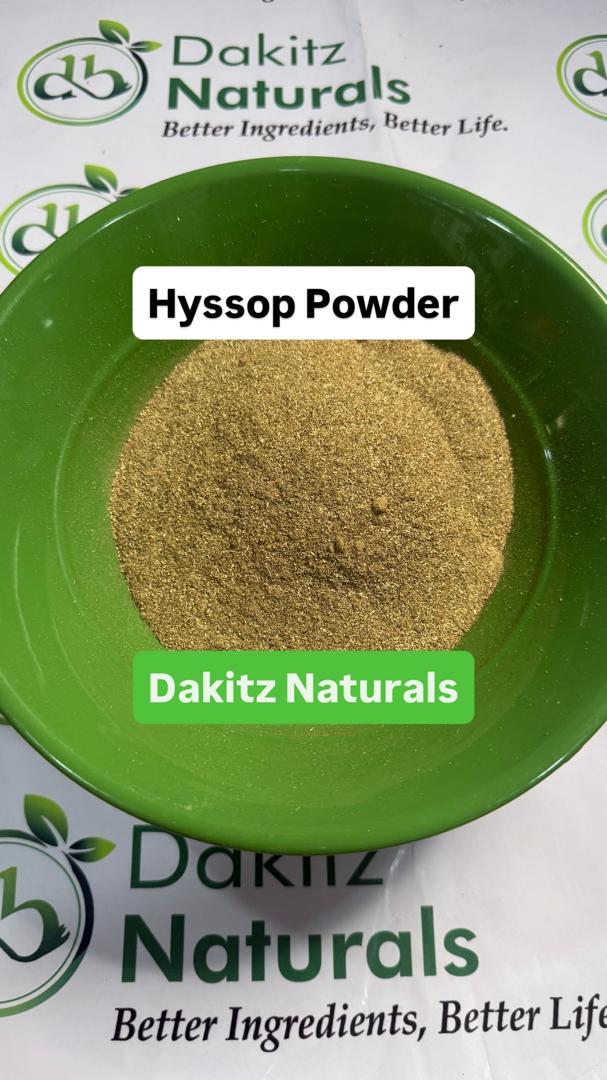
Hyssop Powder (Hyssopus officinalis)
Common name: Hyssop Powder, Hyssop Herb Powder, Common Hyssop, Herb of Grace
Botanical name: Hyssopus officinalis L.
Plant family: Lamiaceae (mint family)
Plant part: Leaves and flowering tops (aerial parts)
Origin: The Mediterranean region, southern Europe, North Africa, and Western and Central Asia
Product Overview
Hyssop has one of the longest histories of any herb in the Western tradition. Hyssopus officinalis is a small, aromatic sub-shrub in the mint family, with narrow leaves and spikes of blue, purple, pink, or white flowers. The name comes from the Hebrew word ezob, which means “sacred herb,” and writers have mentioned the plant since the time of Hippocrates. For centuries, people have used it in cooking, in perfumery, and in herbal teas.
Our Hyssop Powder comes from the dried leaves and flowering tops, which we mill into a fine green to olive-brown powder. It has a warm, minty, slightly bitter taste with a camphor-like note, so it blends well with milder herbs. If you like soothing leaf teas, you may enjoy it alongside Linden Leaf Powder or Guava Leaf Powder.
Traditional herbalists have mostly used hyssop as a warm tea. They have turned to it for chest and throat comfort during cold seasons, often as a gargle, and for digestive comfort after rich meals, because the herb’s aromatic oils are known as carminative, meaning they ease gas and mild cramping. In addition, cooks use small amounts of the fresh herb in soups, salads, and with fatty meats.
Hyssop contains an aromatic essential oil rich in terpenes such as beta-pinene, pinocamphone, and isopinocamphone, along with plant polyphenols and bitter compounds. The oil gives the herb its aroma and much of its traditional reputation.
Because the powder is ground from the whole herb, you can use it as you would other dried herbs. Stir a small amount into hot water for a simple tea, or mix it with other aromatic herbs such as Damiana Leaf Powder in your own blend. If you enjoy traditional Chinese herbs for seasonal wellness, you may also like Cat Claw Powder. Start with a small amount and see how you feel before you increase it.
Nutritional value:
Hyssop is valued as an aromatic herb, not for calories or macronutrients. People use it in small amounts for its flavor and plant compounds, and it provides small amounts of fiber and minerals. The exact amounts vary with the plant, where it grows, and how it is dried.
Composition:
Contains naturally occurring volatile oil (including beta-pinene, pinocamphone and isopinocamphone), flavonoids, phenolic acids (including rosmarinic acid), tannins and bitter principles. The make-up of hyssop oil varies with where the plant grows and the plant’s chemotype.
Benefits Of Hyssop Powder (Hyssopus officinalis)
- Traditionally used in European herbal practice as a warming tea for throat and chest comfort
- Traditionally valued for supporting digestive comfort
- Rich in natural antioxidants and flavonoids.
- Traditionally used to support respiratory health.
- Traditionally used to soothe the throat.
- Supports digestive health.
- Traditionally used to relieve occasional bloating and gas.
- Contains naturally occurring anti-inflammatory compounds.
- Traditionally used to support healthy circulation.
- Supports the body’s natural antioxidant defence.
- Traditionally used in herbal preparations for respiratory comfort.
- Traditionally enjoyed as a seasonal herbal tea during cold weather
- Provides aromatic plant compounds, including terpenes and polyphenols
- Adds a warm, minty flavor to teas, soups, and herbal blends
- Valued as one of the oldest culinary and medicinal herbs in the Mediterranean tradition
Uses:
- Stir it into hot water for a traditional herbal tea
- Blend it with milder herbs such as lemon balm, mint, or linden in a custom tea mix
- Add small amounts to soups, stews, and roasted dishes as a seasoning
- Use the cooled tea as a traditional throat gargle
- Take it in capsules as part of a short-term herbal routine
Precautions:
- Pregnant or breastfeeding individuals should avoid hyssop.
- Do not give it to children.
- Use it in small amounts and for short periods, not continuously for long periods.
- If you take prescription medication, check with a healthcare professional first.
- Stop use if you notice nausea, dizziness, unusual muscle twitching, or an allergic reaction.
Storage:
- Keep it in a cool, dry place away from moisture, sunlight, and heat
- Store it in an airtight container to preserve aroma and freshness
Packaging
Our powders are packaged in Ziploc bags to avoid spillage.
Shelf Life:
• Up to 2 years when stored properly in sealed packaging
• Best potency when consumed within 12–24 months
Note:
No artificial colors, flavors, or preservatives. Product is a natural botanical ingredient; color may vary depending on harvest lot and year.
Disclaimer:
This product is a natural food supplement and not evaluated by the Food and Drug Administration (FDA). It is intended for educational purposes only and is not intended to diagnose, treat, cure, or prevent any disease.
Consult a healthcare professional before use if you have allergies or medical conditions
By purchasing, you acknowledge responsibility for safe and appropriate use.
Frequently Asked Questions
What is hyssop?
Hyssop (Hyssopus officinalis) is an aromatic herb in the mint family. People use its leaves and flowering tops in teas, in cooking, and in traditional herbal practice.
What does hyssop powder taste like?
It tastes warm, minty, and slightly bitter, with a camphor-like note. Many people soften it with honey, lemon or milder herbs.
Is hyssop the same as hedge hyssop or giant hyssop?
No. Hedge hyssop (Gratiola officinalis), giant hyssop (Agastache), and water hyssop (Bacopa) are different plants. True hyssop is Hyssopus officinalis, so always check the botanical name.
Can I use hyssop every day?
Use it in small amounts and for short periods. Check with a healthcare professional first if you take medication or have a health condition.
Is hyssop powder the same as hyssop essential oil?
No. The powder is the dried herb and is used like a tea. The essential oil is much more concentrated and carries serious safety warnings, so do not swallow it.









Reviews
There are no reviews yet.