
Description
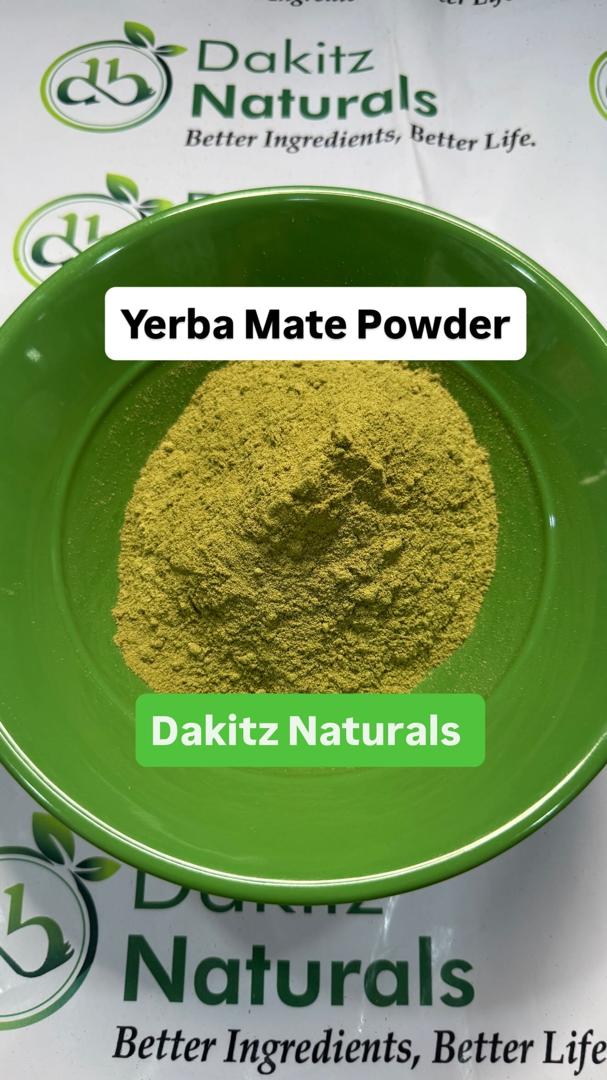
Yerba Mate Powder (Ilex paraguariensis)
Common name: Yerba Mate Powder, Mate Leaf Powder, Maté, Paraguay Tea
Botanical name: Ilex paraguariensis A.St.-Hil.
Plant family: Aquifoliaceae (holly family)
Plant part: Leaf
Origin: Subtropical South America, mainly Argentina, Paraguay, Brazil, and Uruguay
Product Overview
Yerba mate comes from Ilex paraguariensis, an evergreen holly tree that grows in the subtropical forests of South America and can reach about 18 metres in height. People use its leaves. The Guaraní people first used it, and today it is a beloved everyday drink across Argentina, Paraguay, Uruguay, and southern Brazil.
Traditionally, people steep the leaves in hot water and often share the drink from a gourd through a metal straw. It is a social custom as much as a daily beverage, and many people reach for it as an alternative to coffee. Its taste is earthy, grassy, and slightly bitter.
To make our powder, producers harvest the leaves, dry them, and age them, which raises the levels of some active compounds. We then mill the dried leaves into a fine green to olive-brown powder. Because the powder is fine, it mixes into smoothies, lattes, and baking without a strainer. However, it does not dissolve completely, so stir or shake it well.
Mate contains three natural stimulants called xanthines (caffeine, theobromine, and theophylline), along with a large group of plant polyphenols. Some people describe the lift as smoother than coffee, but research has not shown that it differs from caffeine’s usual effects. For that reason, we recommend you count it with your other caffeine sources.
Nutritional value:
Yerba mate is valued mainly as a beverage botanical, not for calories or macronutrients. The leaf provides natural caffeine, small amounts of minerals such as potassium, magnesium, and manganese, and a rich range of polyphenols.
Composition:
Contains naturally occurring purine alkaloids (caffeine, theobromine, theophylline), polyphenols (chlorogenic acids such as caffeoylquinic acids, and flavonoids such as rutin and quercetin), saponins, carotenoids, and trace minerals. Together, these give mate its flavor, its stimulating effect, and its antioxidant profile.
Benefits:
- Naturally contains caffeine, which supports alertness, energy, and focus
- Supports mental focus and concentration.
- Supports metabolism.
- Traditionally consumed to support digestion.
- May help reduce feelings of fatigue.
- Provides natural stimulant properties.
- Contains minerals and plant nutrients.
- Provides theobromine and theophylline, two additional natural stimulants found in mate
- Rich in polyphenols, including chlorogenic acids, which act as plant antioxidants
- Contains saponins and small amounts of minerals, including potassium and magnesium
- Offers a natural alternative to coffee and energy drinks
- Can pair with exercise routines as a pre-workout drink because of its caffeine
- Carries a long tradition as a social, everyday wellness drink across South America
Uses:
- Stir it into hot (warm, not scalding) water, or shake it with cold water and ice
- Blend it into smoothies, lattes, and shakes
- Add it to oatmeal, baking, and homemade energy bites
- Mix it with mint, lemon balm, or citrus for a flavored tea
- Take it in capsules as part of a daily routine
How to prepare it:
- Measure about 3 g of powder (see the serving note below).
- Add it to a cup of warm water, or to a smoothie or other drink.
- Stir or shake well, because the powder settles.
- Let hot drinks cool to a comfortably warm temperature before you drink.
- Sweeten with honey, lemon, or milk if you like.
Precautions:
- Yerba mate contains caffeine. Start with a small amount and count it with your other caffeine sources.
- Enjoy mate warm, not scalding.
- Keep your intake moderate.
- Pregnant or breastfeeding individuals should check with a healthcare professional before use.
- Avoid it late in the day if caffeine affects your sleep.
- Stop use if you notice a racing heart, jitters, stomach upset, or an allergic reaction.
Storage:
- Keep it in a cool, dry place away from moisture, sunlight, and heat
- Store it in an airtight container to preserve flavor and freshness
Packaging
Our powders are packaged in Ziploc bags to avoid spillage.
Shelf Life:
• Up to 2 years when stored properly in sealed packaging
• Best potency when consumed within 12–24 months
Note:
No artificial colors, flavors, or preservatives. Product is a natural botanical ingredient; color may vary depending on harvest lot and year.
Disclaimer:
This product is a natural food supplement and not evaluated by the Food and Drug Administration (FDA). It is intended for educational purposes only and is not intended to diagnose, treat, cure, or prevent any disease.
Consult a healthcare professional before use if you have allergies or medical conditions
By purchasing, you acknowledge responsibility for safe and appropriate use.
Frequently Asked Questions
How much caffeine is in yerba mate powder?
Mate leaf contains roughly 1% to 2% caffeine by dry weight, and a typical cup is often compared to a cup of coffee, at around 80 mg. Because the powder is ground leaf, your amount depends on how much you use. Start small.
Is yerba mate healthier than coffee?
Both are caffeinated drinks with antioxidants. Mate offers three stimulants and many polyphenols, but research does not show it is clearly healthier. Pick the one you enjoy, and keep your total caffeine moderate.
Can I drink it every day?
Many people do. Keep to a moderate amount, drink it warm instead of scalding, and check with a healthcare professional if you have a health condition or take medication.
What does yerba mate powder taste like?
It tastes earthy, grassy, and slightly bitter. Honey, lemon, mint, or milk soften it.
What is the difference between mate powder and mate tea leaves?
Both come from the same plant. The powder is ground finer, so it mixes into drinks and recipes. Cut leaves are usually steeped and strained.









Reviews
There are no reviews yet.